

Credit Consensus Rating analysis and use cases
Executive Summary
- Credit Consensus Ratings cover a large universe of private, unrated borrowers.
- Consensus ratings are the building blocks for an extensive set of default risk proxy indices covering different geographies, industries, sectors and obligor types.
- Credit portfolio managers now have access to derived Correlation and Transition matrices to support risk budgeting, portfolio structure optimisation, and a range of commercial use cases.
Introduction
Credit portfolio managers face the dual challenge of rising defaults and limited scope to diversify default risk. Banks use internal credit ratings to mitigate these risks; Credit Benchmark’s Credit Consensus Ratings (“CCRs”) derived from these internal views provide banks with model validation and an overall view of the credit landscape, extending to geographies and industries where they may have no current exposure.
The CCR database now provides Probability of Default (“PD”) estimates for more than 120,000 issuers and spans more than 130 months. Issuers are grouped by type, geography, and industry or modelled as bespoke indices and portfolios. Various metrics – time trends, credit profiles, credit transitions, volatilities and correlations – are available to understand credit behaviour in and between these groupings. Here we describe how these consensus rating proxy indices and derived analytics are being used by clients to measure and manage credit portfolio risk.
Credit Risk Profiles and Rating Transitions
Credit profiles are a simple tool to approximate portfolio credit risk. Mapping exposures to the seven main credit categories (aaa/aa/a/bbb/bb/b/c), it is possible to estimate the likely probability of default for the portfolio. With the addition of a transition matrix (“TM”), it is also possible to estimate the likely change in risk due to credit “drift”. With a large consensus universe, exposures can be independently rated, and rating transitions can be modelled at detailed country- and sector- specific levels.
Example:
A credit portfolio is split 50/50 between Global Corporates and Global Financials with the following 7-category credit profiles:
Credit Level – Global Corporates vs. Financials
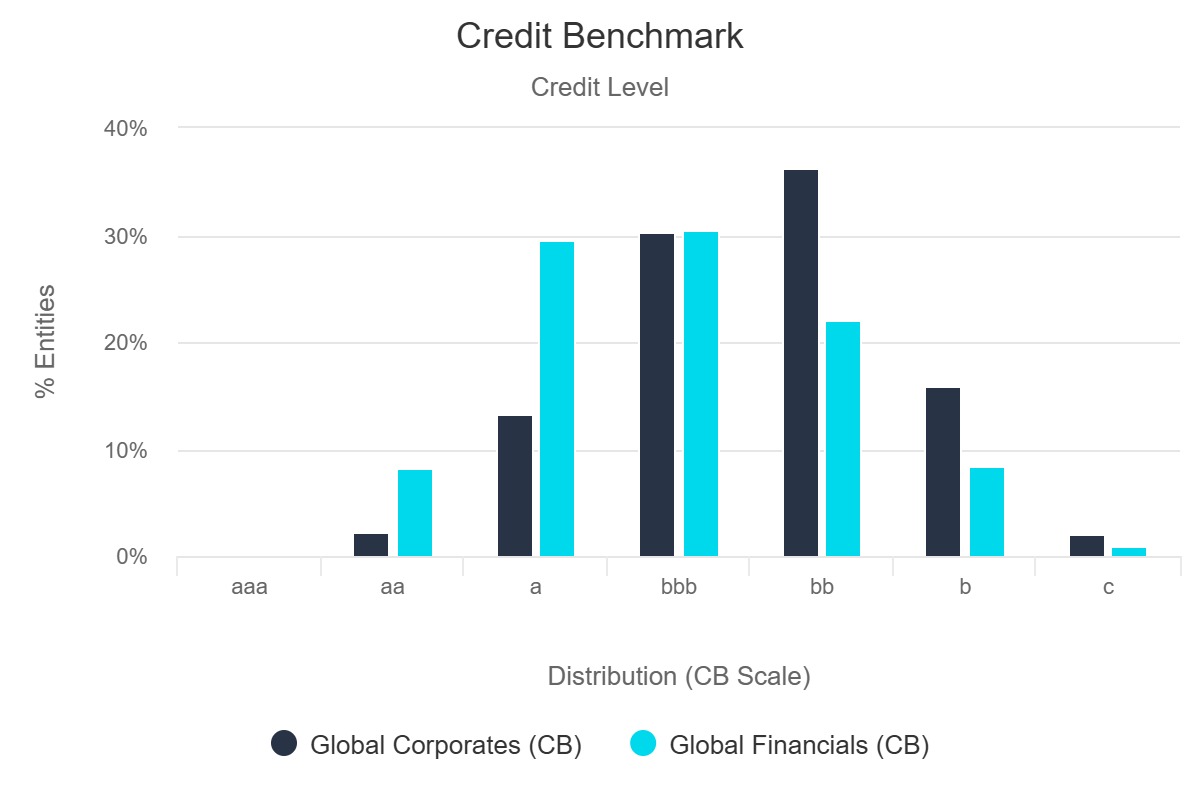
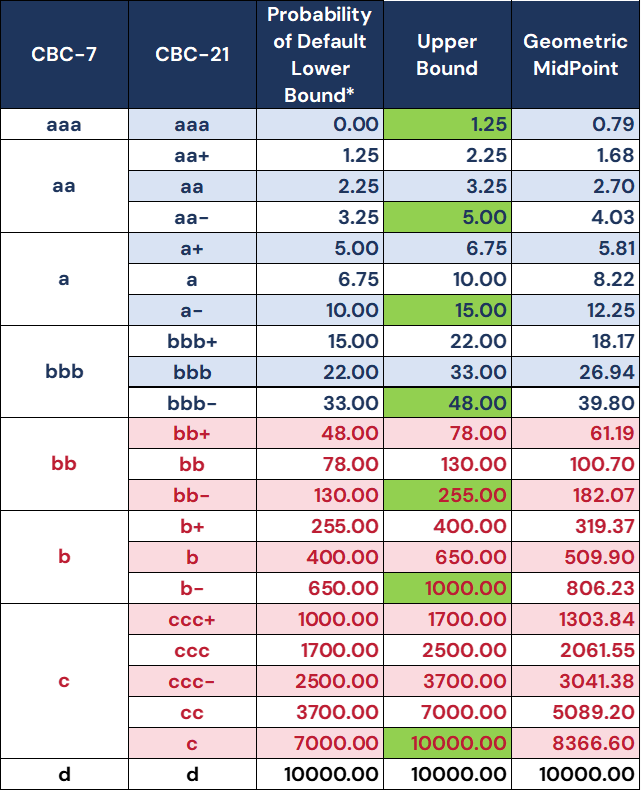
Combining these exposures with credit category midpoint PDs gives Default Probabilities of 1.54% for Global Corporates and 1.11% for Global Financials1.
The table below shows transition matrices for these obligor types for the past 12 months:
Global Corporates – Past 12 Months

Global Financials – Past 12 Months
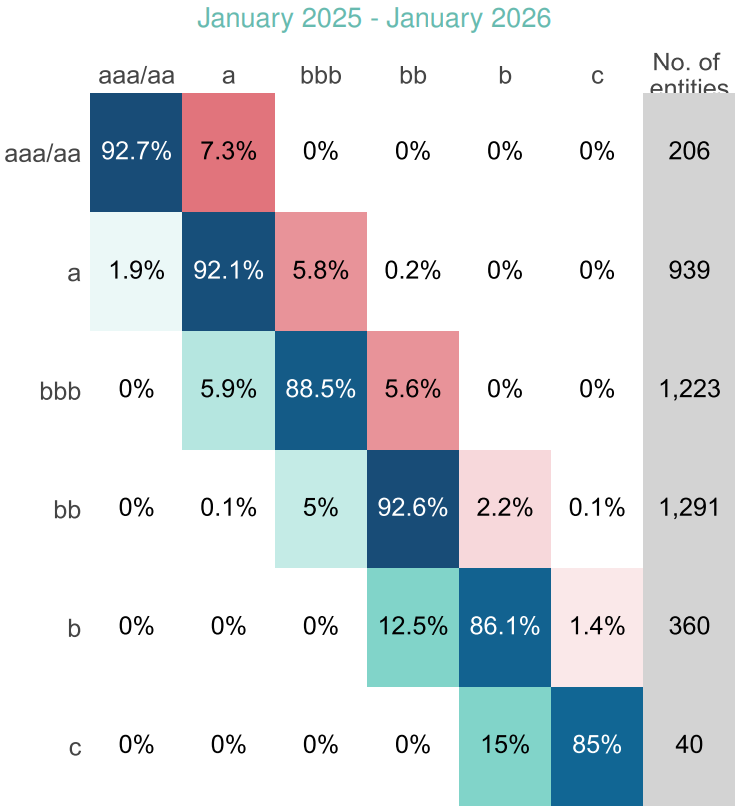
If these transition rates persist, 1-year ahead credit profiles are expected to show little change:
Global Corporates Current & Projected
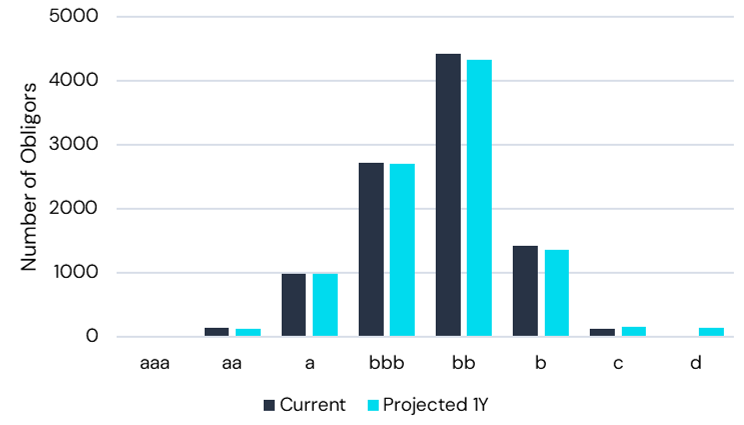
- Current Default Risk = 1.54%
- Expected Default Rate = 1.45%
Global Financials Current & Projected
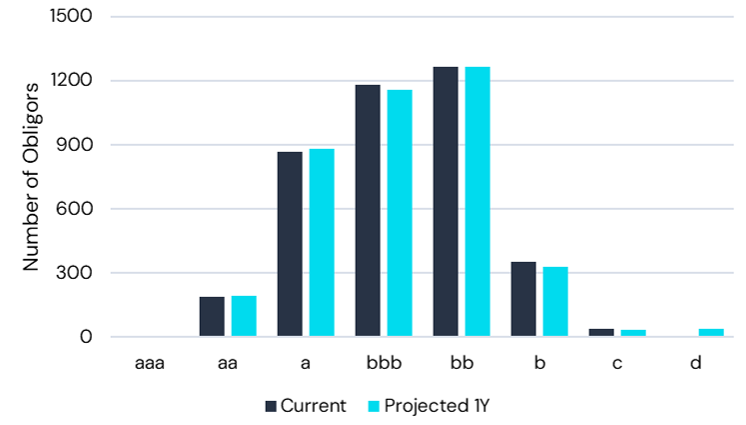
- Current Default Risk = 1.11%
- Expected Default Rate = 1.04%
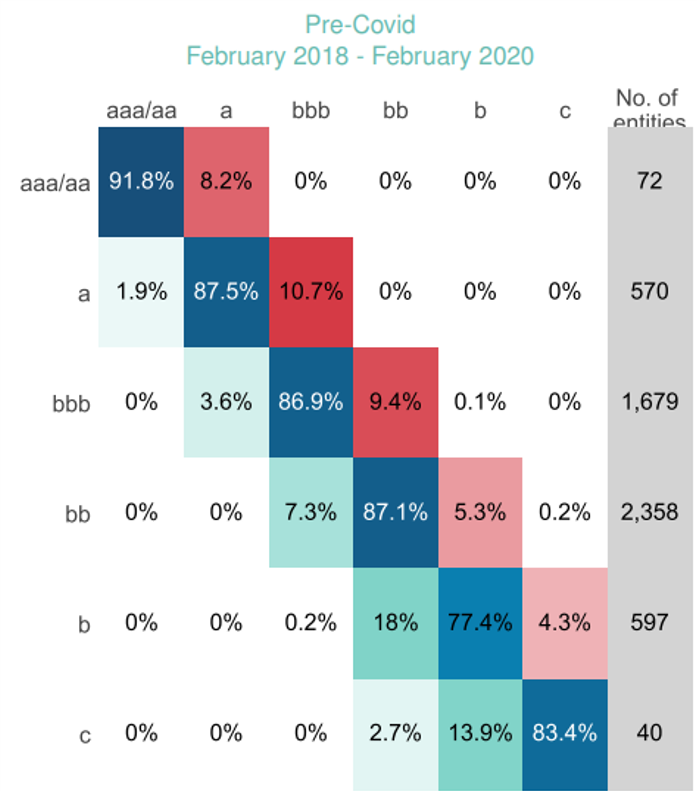
However, transition rates can vary by sector – two sectors with identical credit profiles may diverge over time due to different transition behaviour. And migration rates can shift significantly during a major credit crisis – the matrices on the following page are from the pre-Covid and Covid periods:
Global Corporates – Pre-Covid
Global Corporates – Covid Downturn

Summing the upper right triangle (downgrades) for each row, and converting these to downgrade numbers for each row, gives total Downgrade rates of Pre-Covid: 382/5276 = 7.2% and Covid Downturn: 831/5716 = 14.5%.
PD Volatility spiked from 0.4% per month (Pre-Covid) to over 1% per month during Covid.
The charts below show the projected changes using pre-Covid (top) and Covid (bottom) transitions:
One year projected credit profile using pre-Covid transitions – proxy for “Normal”
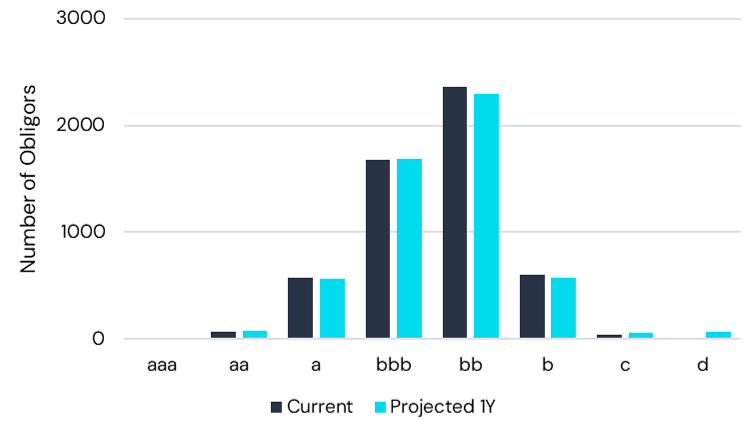
- Projected PD = 1.31% vs 1.27%
One year projected credit profile using Covid transitions – proxy for “Downturn”

- Projected PD = 1.64% vs 1.30%
Note the large increase (from 1.30% to 1.64%) projected during a downturn. Managers can blend TMs from Downturn, Upturn and Normal periods to generate a range of possible scenarios for portfolio PDs. For more details, see Managing Credit Portfolio Default Risk With Credit Rating Transition Matrices.
Scenarios can be sector specific and probability-weighted to give expected future PD drifts, and can be extended to multiple time periods for different sectors, analogous to PD term structures. Managers can use this to prioritise portfolio segment reviews.
This analysis can be expanded to 21 credit categories, and/or a detailed subset of countries and sectors. (The level of detail depends on available coverage – for robustness the transition matrix needs a large cohort of obligors.)
The consensus rating database supports nearly 500 TM categories, covering various geographies and industries with monthly histories of up to 10 years. The matrix below is just one example:
21×21 Transition Matrix Example – North America Consumer Goods 2023-2024

Use cases:
- High level multi-period portfolio risk drift modelling
- Detailed monitoring and modelling of “Fallen Angel” rates
- Scenario analysis using existing or simulated TMs
- Prioritise segments for review
Excel worked examples of TM calculations are available to subscribers.
PD Volatility
Credit transitions are effectively single obligor PD changes, so as PD volatility increases, so does the transition rate. But volatile default risk can have a major impact on portfolio risk long before it is captured by high level transition matrices. Even on the 21-category scale, a transition from one credit category midpoint to another is equivalent to a 40% change in PD. By contrast, consensus data is very granular (PDs can take any value from 1Bp to 10,000 Bp) so trend changes in PDs can be identified long before an obligor has made a full upgrade or downgrade.
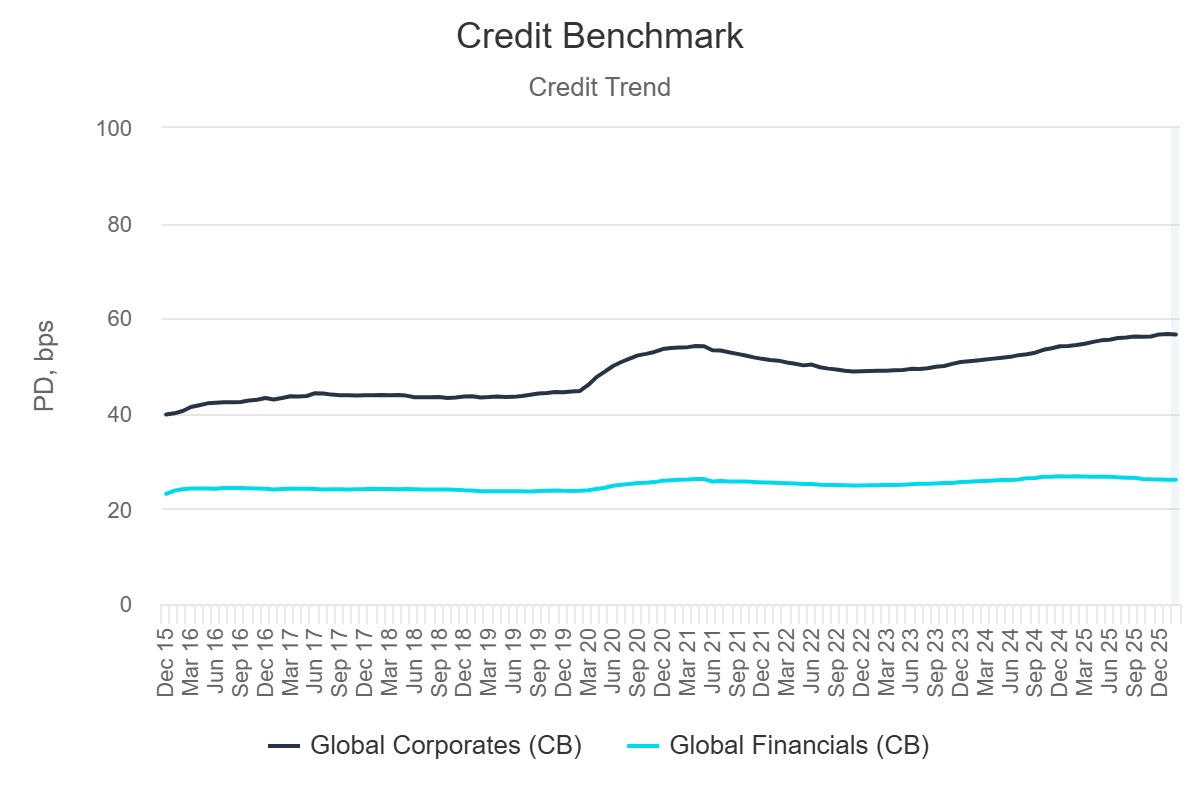
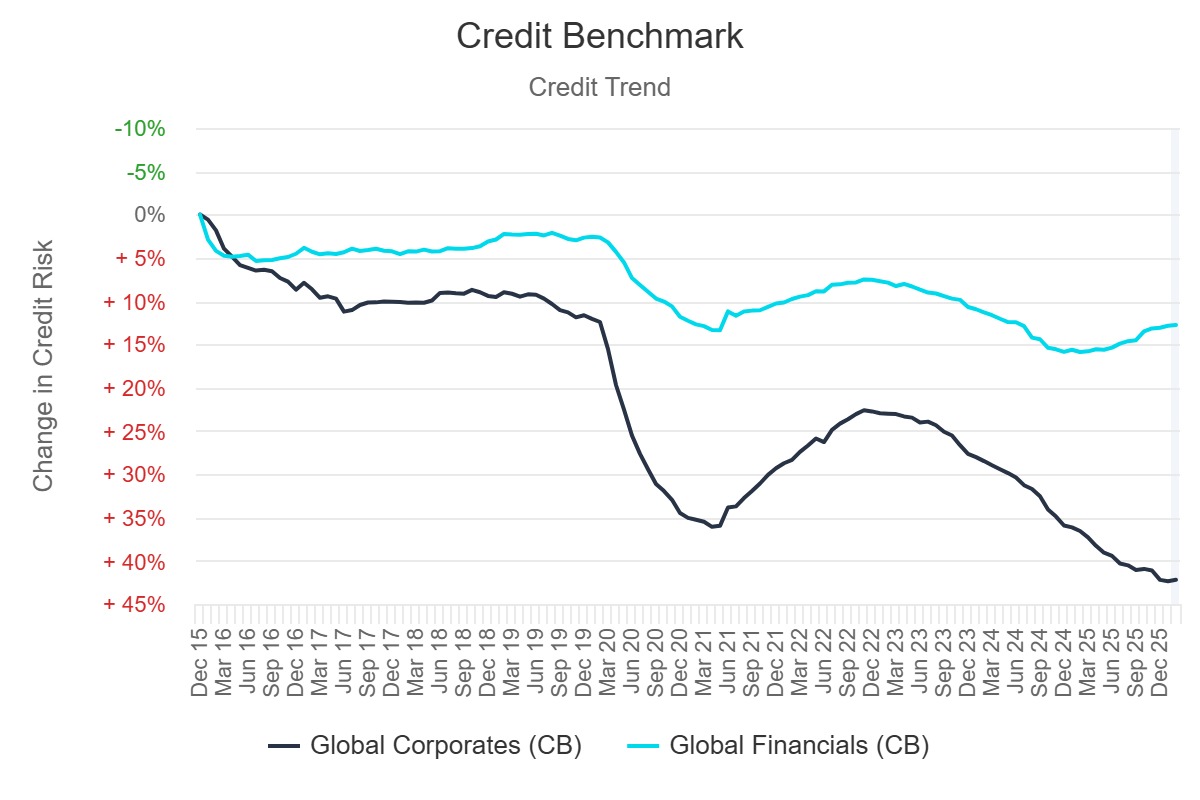
The charts below shows how global Corporate and Financial default risks have changed over the past 10 years2.
PD Level
Cumulative PD Change
Monthly PD Volatility, Rolling 6-Month Window
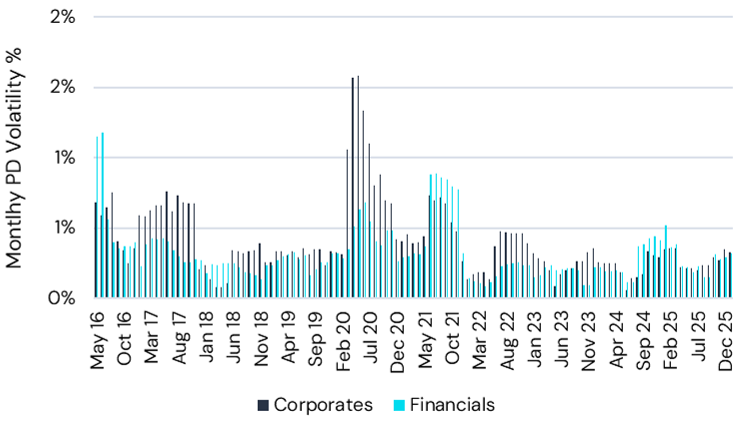
The chart above shows PD volatility, measured monthly using a 6-month rolling window.
This shows spikes coinciding with PD deterioration and drops as the rate of PD deterioration slows. This is the basic process that eventually drives full scale shifts in transition frequencies.
Credit has deteriorated steadily for most of the past 10 years, with an accelerated decline and partial recovery during Covid. In the case of (Non-financial) Corporates, the Covid recovery ran out of steam in 2023 and the deterioration has resumed; a cumulative 40% increase in expected default risk since 20153. Financials have seen less impact, but their expected default risk is still 15% higher.
So, diversification has been a challenge for credit portfolio managers, with only a handful of sectors like gold mining showing 10-year improvement. However, credit portfolio managers are aiming for positive risk-adjusted returns. Higher risks, even with limited scope for diversification may not be a problem if returns outweigh realised losses. But it is crucial to be able to plot risk as well as return for each portfolio, and this is where consensus data can play a crucial role.
Measuring Credit Portfolio Risk
Credit Portfolio Management increasingly uses a range of metrics to measure and manage risk but is traditionally split into Expected (EL) and Unexpected (UL) losses4. EL takes default risk and recovery as given, but these estimates are subject to sampling variation, and UL addresses this at the single borrower level.
The standard aggregation across single borrowers is the correlation weighted sum of single obligor exposure level risks, but single obligor default risk correlations may be unavailable for the growing universe of private assets.
Instead, obligor PDs can be aggregated to multiple levels – such as “Private Unrated High Yield German Autoparts”. The main CB schema is shown in Appendix 1 but alternative data cuts are available within this. The full list of possible schema permutations runs into tens of thousands, so consensus data is a rich source of proxies, especially for private assets.
With portfolio exposures mapped to groups, indices of group credit risk provide proxies for sections of the portfolio. The main drivers of credit portfolio risk can often be captured at this proxy (“Allocation”) level. Using this proxy index approach, portfolio UL is then a correlation-weighted combination of the geography/industry aggregate ULs5,6.
The traditional UL calculation is effectively PD sampling volatility7. Consensus data tracks PD volatility over time, allowing for structural shifts in sector PDs and changing relationships between sectors.
Consensus data shows full credit cycle history and dynamic estimates of default risk covariances.
Credit Benchmark advantages:
- Supports diverse range of proxy indices due to broad single name coverage
- Covers large universe of private obligors
- Updated monthly providing high frequency private asset PD Volatility metrics for risk models
- Tracks credit cycles and changing relationships between average sector default risks
Diversification Example
The examples below use a portfolio of equally weighted exposures across Global Consumer, Industrial, Banks and Non-Life Insurance. Global Corporates and Financials are also shown to highlight the relationship between the industry proxies and the more aggregate indices.
Correlations Dec-24 to Oct-25
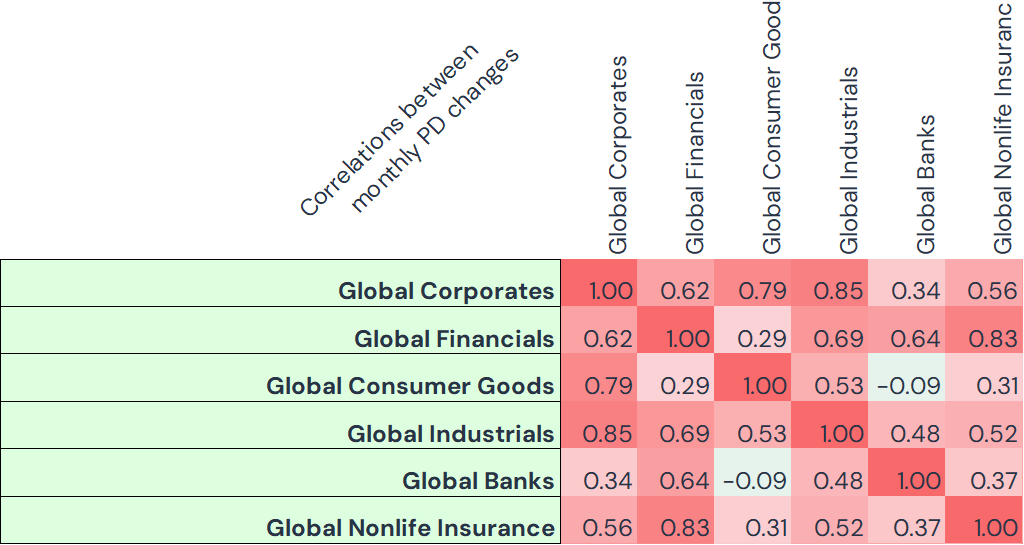
- Average PD: 0.40%
- Average PD Volatility: 0.40%
- Covariance Adjusted PF PD Volatility: 0.30%
- Average Off Diagonal Correlation 0.43
Correlations Mar-20 to May-21
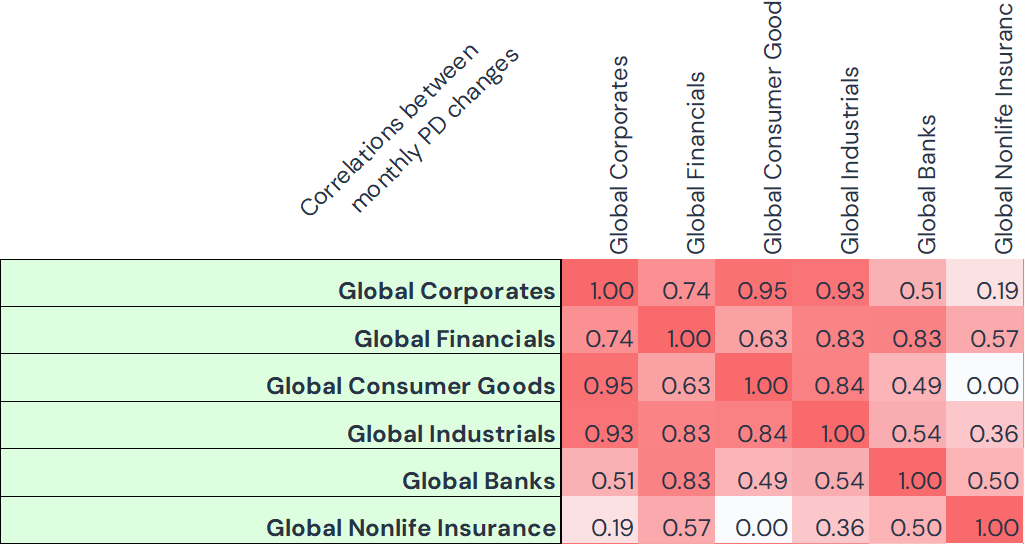
- Average PD: 0.40%
- Average PD Volatility: 0.58%
- Covariance Adjusted PF PD Volatility: 0.74%
- Average Off Diagonal Correlation 0.35
For example, the correlations between Global Corporates and Consumer Goods / Industrials are 0.79 / 0.85 over the past 12 months. For Global Financials and Banks / Non-Life insurance the correlations are 0.64 / 0.83 over the same period.
This shows that during Covid, the average monthly PD Volatility for these high-level corporate proxy indices was 0.58%, 50% higher than the level of 0.40% pm over the past twelve months. For an equally weighted portfolio of loans, the covariance adjusted risk during Covid was 0.74%, more than twice the current level of 0.30%. The average off-diagonal correlation of 0.43 during covid vs 0.35 over the last 12 months.
This highlights that during downturns there is less scope for risk diversification.
The portfolios discussed here can either be represented by a 50/50 allocation to Corporates and Financials or by a 25/25/25/25 allocation to the four industries. In this case, the results are very similar, but with further disaggregation they are likely to diverge. For example, the Portfolio Analytics section later in this report shows that the PD Volatility of the EU industrial Machinery proxy index is 0.65%; but the equivalent for German Industrial Machinery is 3.51%. So in this EU case, the apparently innocuous EU proxy will materially understate the PD Volatility of the German Industrial Machinery loan portfolio.
Measuring Diversification Benefit
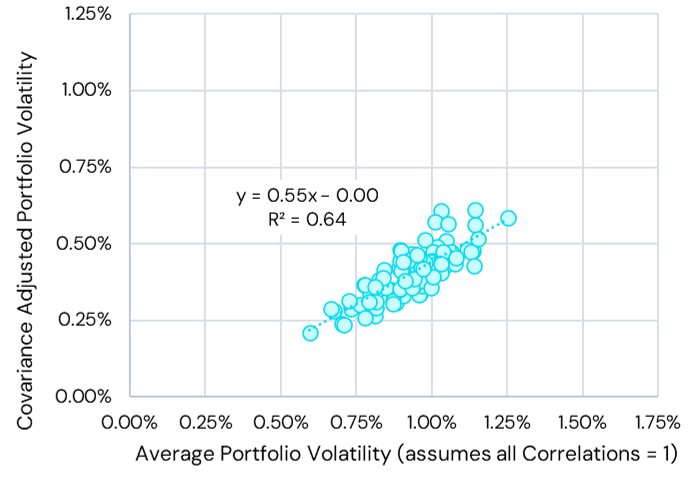
The charts below show risk metrics for 100 random portfolio weights all drawn from the same set of 15 proxy indices. They are split into 4 periods – the 12 months before and after President Trump’s re-election in 2024, and the periods before and during Covid.
Trump Presidency & Tariffs – 12 Months Pre-November 2024
Trump Presidency & Tariffs – 12 Months Post-November 2024
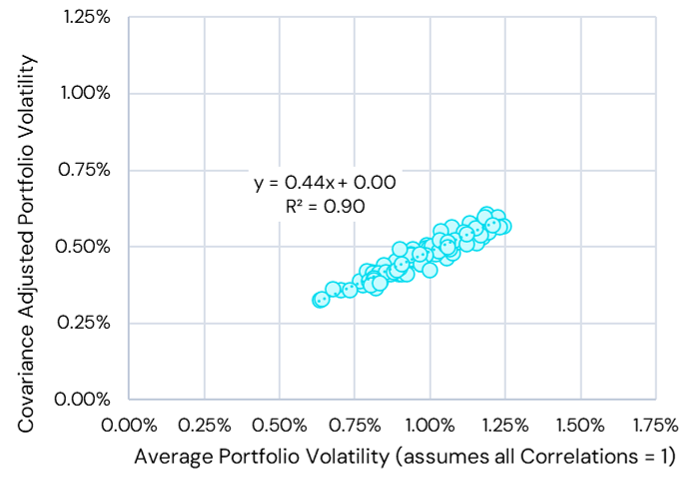
Pre-Covid

Covid Period

Proxy indices used for portfolio construction:
- Global Corporates
- Global Financials
- Global Consumer Goods
- Global Industrials
- Global Banks
- Global Nonlife Insurance
- United States Corporates
- China Corporates
- Taiwan Corporates
- Germany Industrial Machinery
- Asia Corporates
- Asia Industrial Machinery
- Africa Corporates
- EU Corporates
Each blue dot represents a single portfolio. The axis scales are the same for all plots. The x-axis shows portfolio average monthly PD volatility, assuming that all obligors are equally correlated (i.e. no diversification benefit). The y-axis shows the covariance adjusted portfolio PD volatility.
In every case, the fitted line has a slope value of close to 0.5. A value of 1 means no diversification benefit, so in all periods there are significant benefits to diversification.
Before adjusting for diversification, the narrowest range is the Pre-Covid period with PD Volatility ranging from 0.6% – 1.1%; diversification benefits reduce this to 0.3% – 0.6%. The Covid period shows an undiversified range of 1% – 1.7%; diversification benefits reduce this to 0.7% – 1.1%. The slope value is 0.59; this means less scope for diversification, but even during this turbulent phase there are still major advantages to holding abroad portfolio.
The periods before and after the November 2024 election show similar volatility levels on the x-axis. Risk levels are very similar before and after the election and before and after measuring diversification. But the post-election regression fit is very strong, meaning that this diversification benefit is mainly driven by sector behaviour – idiosyncratic, single obligor PD changes are less prevalent. But in the 12 months before the election, the diversification parameter is 0.55 – similar to the Covid period. Whereas in the 12 months following the election, this has improved to 0.44, the lowest value of the four periods. So the current environment rewards diversification more than ever.
Portfolio Analytics
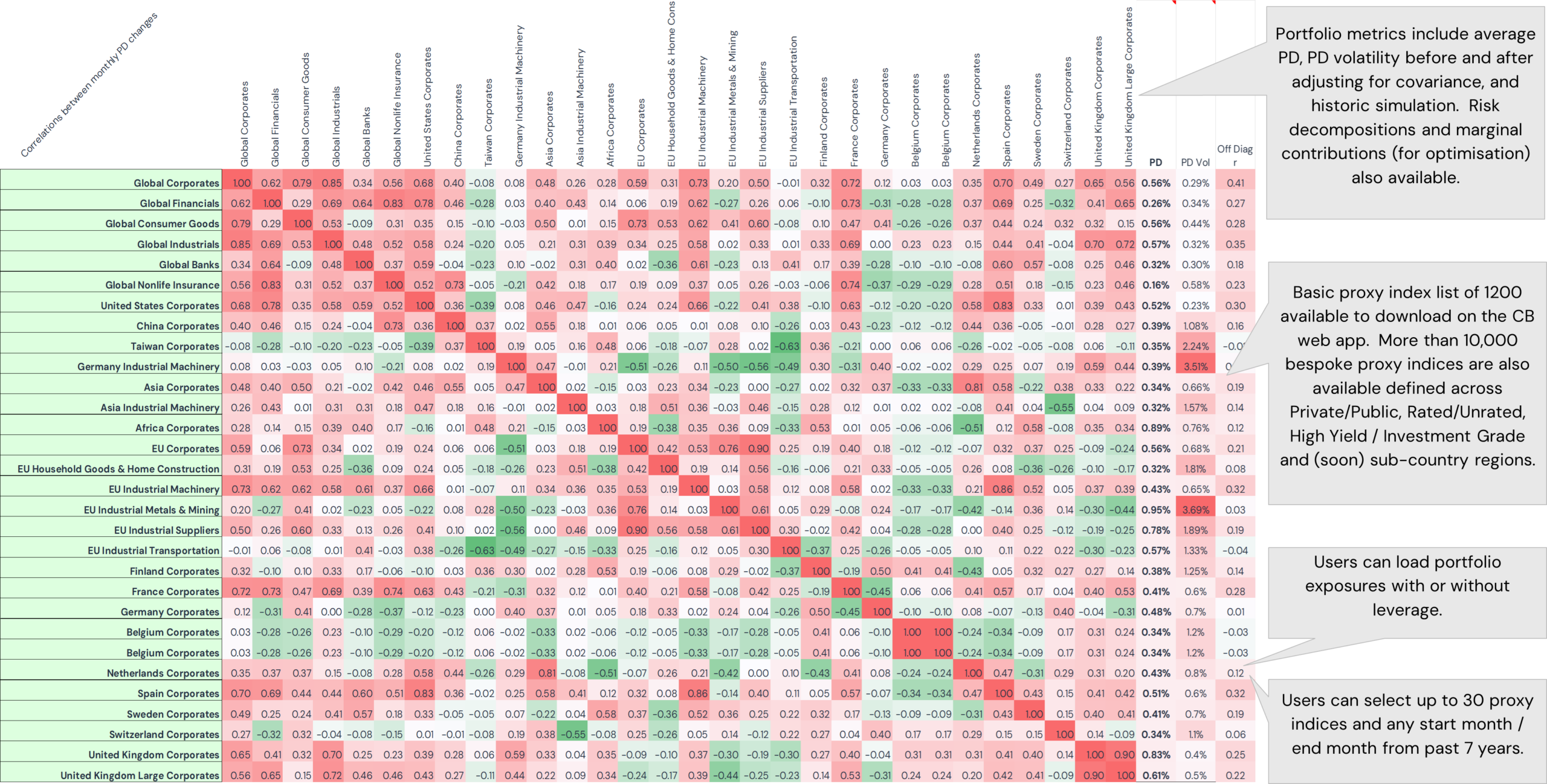
The annotated screenshot below shows a typical 30×30 Correlation Matrix derived from PD changes – this is an extract from an Excel portfolio risk workbook available to clients.
Use cases: Credit Portfolio Management, Risk Budgeting, Optimization, SRT, CLO Tranche modelling.
Alternative Correlation Inputs
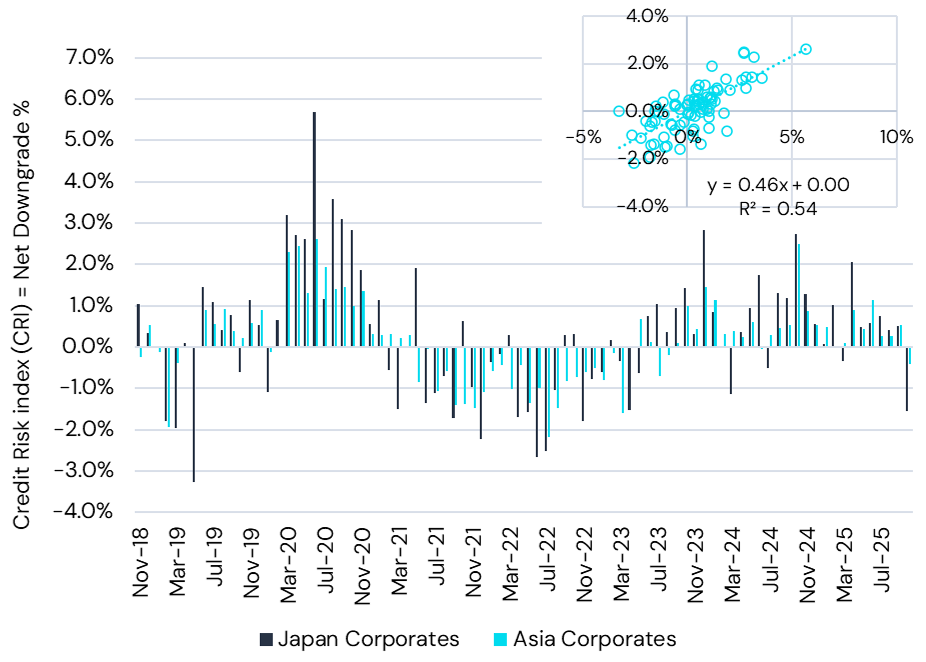
When estimating correlations, the most common input is monthly Probability of Default (“PD”) % changes. This is an upgrade to the standard UL risk measure, since unexpected PD changes are a key risk driver. While PD Volatility measures the speed of change in a proxy index, the related Credit Risk Index (“CRI”) metric focuses on net downgrades, showing the breadth of changes across the proxy index constituents. Any change in PD is recorded as a downgrade, so this is a very sensitive measure and may give an early warning of a broader wave of downgrades and a resulting spike in PD.
Details of the CRI calculation can be found here.
The charts below compare correlations based on CRI levels vs. PD changes:
CRI Japan Corporates vs Asia Corporates
PD Changes Japan Corporates vs Asia Corporates
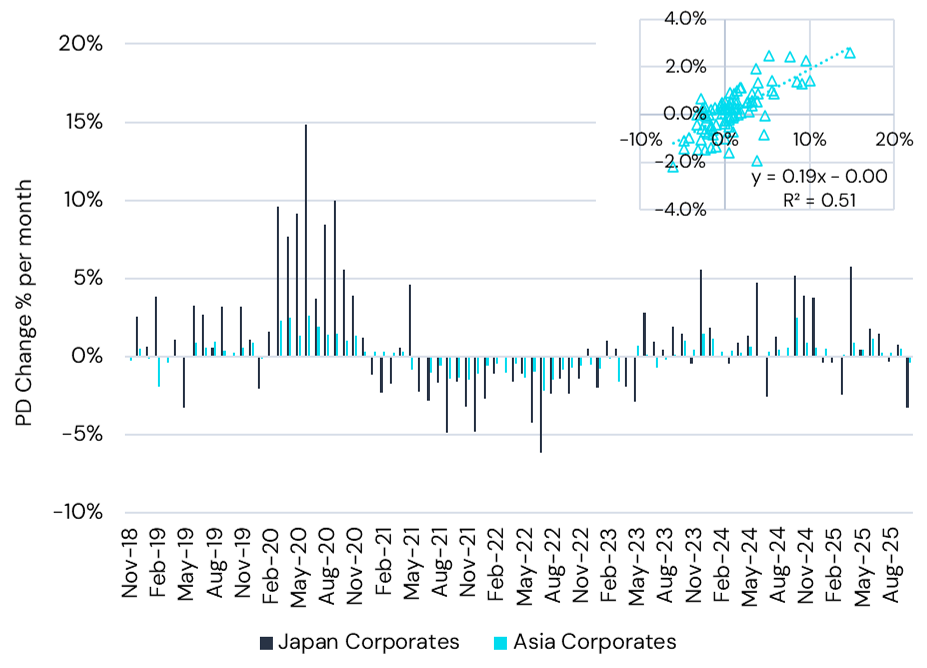
They are very close (R2 = 51% vs 54%). Both show credit cycles, although the CRI cycles are more pronounced and potentially lead the PD index at times – especially if downturns or upturns are broad-based but initially involve small PD changes. The two measures are complementary, and both are available in CB data files and the correlation workbook
Other measures of congruence between two series may be useful but less tractable – e.g. cross-correlation (leads and lags), co-integration, etc.
Principal Components Analysis (PCA)
With a very large number of proxy indices available, the challenge is to select a small but representative set. Principal Components Analysis can be used to shrink the choice set – various developers have made these available as free Excel Add-ins.
Conclusions
This report highlights some of the ways that Credit Benchmark clients are using proxy indices, transition matrices and correlation analytics to manage credit portfolio risks.
For funds with short time horizons, especially open-ended funds which may face significant liquidity demands, low short term volatility and correlation may be crucial.
For closed-ended funds or long horizon insurance assets, credit “drift” may be an issue and long term returns net of credit losses are more important.
For loan portfolios with different investment objectives and risk criteria, consensus data can be used to identify robust vs. unreliable relationships between sectors and countries.
Worked examples of the calculations shown here are available on request.
Appendix 1: Proxy Index Schema

Additional bespoke proxy indices are available with splits for Public / Private, Rated / Unrated, Investment Grade / High Yield and country subdivisions. Consensus rating for client portfolio holdings can also be mapped to client schemas.
Appendix 2: Definitions
Single Obligor Probability of Default (“PD”): 1-year through the cycle hybrid ex ante expected default rate, calculated as a equally weighted arithmetic average of all bank contributed PDs for that obligor
Proxy Index Probability of Default: Geometric equally weighted average of PDs across all obligors in proxy index universe
(Observed) Default Rate: Ex post number of defaulted obligors as % of underlying universe
PD Volatility for Proxy Indices: Standard deviation of 1 month % changes in PD over specified historic sample period (e.g. 6 month rolling would be standard deviation of monthly % changes over past 6 months) – to give an estimate of 1-month volatility. If the window is extended to e.g. 12 months, the volatility estimate is still a 1-month metric.
PD Volatility for Single Obligors: Traditionally, the Unexpected Loss % for single obligor = PD sampling variation. If the “true” PD is fixed and known, then single obligor sampling volatility is usually defined as [PD*(1-PD)]^0.5. But In practice PD volatility shifts over time, and obligors with the same PD show different levels of PD volatility this is where consensus data can provide detailed additional insights, for example by calculation the cross-sectional standard deviation of PD changes for all single obligors in a chosen sector and credit category.
Correlation between PD Changes: Pearson correlation coefficient = Covariance(A,B) / Volatility(A)*Volatility(B) where A and B are PD% changes in proxy indices A and B. Changes are used to remove the trend effect. The same formula can be used for CRI levels, where A and B are Net Downgrade levels in proxy indices X and Y. Levels are used to capture the trend effect, but spurious correlations are a potential issue. The ideal approach is to use two sets of correlations, based on POD changes as well as CRI levels.
Covariance adjusted portfolio risk: If the vector of portfolio exposures is E and the covariance matrix is V then portfolio risk is given by ETVE. Covariance between PD Changes or CRI Levels: Correlation (A,B) x Variance (A) x Variance (B) where A and B are proxy indices.
Credit Risk Index (“CRI”): Net downgrade frequency = (Downgrades – Upgrades) / Proxy Index Constituent Count. Downgrades and Upgrades are based on the subset of like-for-like PD changes i.e. where the same bank has changed its PD estimate.
Transition Matrix (“TM”): Obligor rating change frequencies based on fixed cohort net change between start and end period (i.e. and obligor can downgrade and then upgrade during the period and the matrix will only record its net change between start date and end date). If credit profile vector now is P(0) and 1-year transition matrix (including column for expected default rates) is TM(0,1) then expected “drift” (i.e. no active change in exposures) credit profile in 1 year is P(1) = TM(0,1)TP(0).
Single name correlations: Single name PDs may be stable for long periods, or make infrequent step changes, or even upgrade followed by a downgrade over a short period. This makes pairwise comparisons challenging.
An alternative is to use the CAPM approach, estimating single name betas with respect to a relevant proxy index. In equity market models the betas can be estimated by linear regression, but for credit data the most likely route is a priori estimates of betas.
For example, two oil companies, A&B, may differ in upstream/downstream mix. This could be used as the basis for beta estimates with respect to an oil company credit index. The correlation estimate is then given by:
Correlation(A,B) = (A vs Proxy Index)* (B vs Proxy Index)*Volatility(Proxy Index)^2 / [Volatility(A) * Volatility(B)]
But this requires suitable estimates for Volatility(A) and Volatility(B).
These could be as simple as “typical” oil company PD volatility, estimated by pooling monthly PD changes across a large universe of oil companies over the same estimation period as for the Volatility of the Proxy Index.
This approach has some limitations – in the simple formulation above the betas need to relate to the same proxy index. This is possible for a global industry like Oil, but there can be large regional differences between default risk trends in the same industry. This requires some major assumptions or an additional round of betas that link two proxy indices to a common global index.
Appendix 3: Consensus PD Scale
Endnotes
- Using the consensus rating scale which assigns Default Probability ranges to letter-based ratings. See Appendix 3.
- Plotted PDs are geometric averages. These credit indices are built from baskets of obligors, rebalanced regularly. Baskets are chain linked to provide a consistent trend.
- NB: This is similar to the increase in observed defaults reported by S&P over the period 2015-2024. See Global Corporates, Speculative Grade.
- Traditionally EL = EAD x PD x LGD (cost of doing business), UL = EAD x LGD x ([PD x (1-PD)])^0.5 (risk of doing business). There are various more complex versions for UL depending on assumptions about volatilities for LGD and PD. UL can be calculated for different numbers of standard deviations to give a Credit VaR that can be compared with Expected Loss.
- See Appendix 2
- Assumes geographic and industry diversification and large obligor universe. Concentrated single name exposures with no proxy, are treated as independent (“Selection”) and combined with Allocation risk.
- This applies Binomial distribution variance calculation to PD estimates (i.e. assumes PDs are iid). With actual PD volatility data this assumption can be waived.
Download PDF
Please complete your details to download the PDF of this report.
"*" indicates required fields
By submitting this form you agree to Credit Benchmark’s Privacy Policy and Terms and Conditions.





Want to see Credit Benchmark in action?
Schedule a short 30 minute demo and let our team walk you through the platform, demonstrate key capabilities, and answer any questions live.